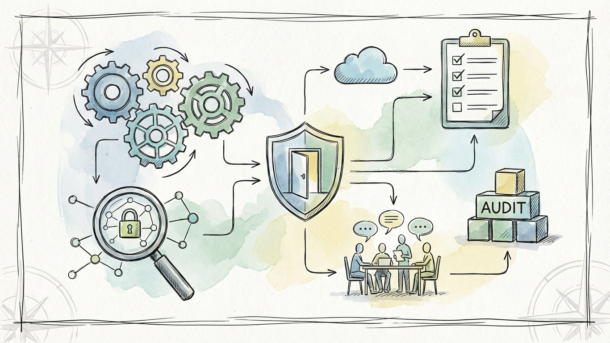
The Evolution from Pen Testing to Comprehensive Assessment
Twenty years ago, vulnerability assessment meant running Nessus against your network and calling it a day. Those simpler times bred a generation of security professionals who confused tool output with actual risk understanding. Today’s threat environment demands a different approach, one that combines automated scanning with genuine analytical thinking.

The fundamental shift happened around 2010 when advanced persistent threats showed that traditional perimeter-focused assessments missed the mark entirely. Organizations discovered that their perfectly patched external surfaces meant nothing when attackers moved through compromised credentials or exploited business logic flaws that no scanner could detect.
Modern vulnerability assessment includes threat modeling, attack surface analysis, and continuous monitoring frameworks. The goal isn’t just finding CVEs anymore. It’s understanding how an adversary would actually move through your environment and what business impact that movement would create.

The Three-Tier Assessment Framework
After implementing dozens of vulnerability management programs across different industries, I’ve settled on a three-tier approach that balances thoroughness with practical resource constraints. Tier One focuses on automated discovery and classification. This includes network scanning, web application testing, and configuration baseline comparisons. The output feeds directly into your vulnerability management system for tracking and remediation workflows.
Tier Two introduces human analysis. Security engineers review scan results within business context, prioritize based on actual exploitability, and identify systemic issues that automated tools miss. This layer catches things like privilege escalation paths, trust relationship abuse, and environmental dependencies that create unexpected attack vectors.
Tier Three is adversarial simulation. Whether through formal red team exercises or structured attack path analysis, this level validates whether your defensive controls actually work under realistic conditions. It’s where you discover that your perfectly segmented network has management VLANs that bypass every control you’ve implemented.
Tools and Methodologies That Actually Matter
The security tool market loves selling complexity, but effective vulnerability assessment relies on a surprisingly small set of well-integrated capabilities. Start with comprehensive asset discovery because you can’t secure what you don’t know exists. Tools like Lansweeper or Armis excel at finding shadow IT and IoT devices that traditional network scanners miss entirely.
For vulnerability scanning, resist the urge to deploy everything at once. Tenable and Qualys remain solid choices for enterprise environments, while OpenVAS works well for smaller organizations willing to invest setup time. The key insight most teams miss is that scanner accuracy depends heavily on credential configuration and scan timing. Anonymous scans tell you almost nothing useful about modern systems.
Web application assessment requires specialized tooling because network scanners fundamentally misunderstand application logic. Burp Suite Professional remains the gold standard for manual testing, while DAST tools like Veracode or Checkmarx help with continuous integration workflows. The reality most organizations resist accepting is that meaningful application security assessment requires people who understand both security and development.
Configuration assessment often gets overlooked, but misconfigurations cause more breaches than unpatched vulnerabilities. Tools like Prowler for AWS or CIS-CAT for endpoint configuration provide structured approaches to baseline validation. The challenge lies not in running these tools but in maintaining configuration drift awareness over time.
Building Sustainable Assessment Processes
Vulnerability assessment fails when treated as a periodic event rather than an ongoing process. Quarterly scans worked when change happened slowly, but modern environments shift daily. Successful programs integrate assessment activities into existing operational workflows rather than creating separate security theater.
Continuous monitoring requires careful instrumentation choices. Deploy vulnerability scanners as virtual appliances within each network segment rather than trying to scan everything from a central location. This approach reduces network traffic, improves scan accuracy, and provides better visibility into segmentation effectiveness.
Establish clear escalation criteria based on actual business risk rather than CVSS scores alone. A high-severity vulnerability in a development environment might warrant routine patching cycles, while a medium-severity issue in customer-facing infrastructure could require emergency response. Context matters more than vendor severity ratings.
Documentation and reporting consume disproportionate time in most vulnerability programs. Automate routine reporting through your vulnerability management platform, but reserve human analysis for trend identification and strategic recommendations. Executive leadership needs to understand risk trajectory and resource requirements, not individual vulnerability counts.
Career Development Through Security Assessment
Vulnerability assessment work offers unique career development opportunities because it touches every aspect of enterprise technology. Junior security analysts gain exposure to network architecture, system administration, application development, and business process understanding. This breadth proves invaluable for long-term security career growth.
The field rewards both technical depth and communication skills. Understanding how buffer overflows work matters less than explaining why a particular vulnerability creates business risk and what remediation options exist. Successful vulnerability management professionals become organizational translators between technical teams and business stakeholders.
Specialization opportunities abound within vulnerability assessment. Cloud security assessment requires different skills than industrial control system evaluation. Application security assessment demands development background that network security professionals often lack. Choose specialization areas based on industry growth trends and personal interest rather than current market demand alone.
Building expertise in vulnerability assessment requires hands-on experience with diverse environments. Seek opportunities to work with different technologies, industries, and organizational maturity levels. The insights gained from assessing a startup’s cloud-native architecture will inform your approach to legacy enterprise environments in unexpected ways.
The security community benefits from practitioners sharing real-world assessment experiences and lessons learned. Consider contributing to open-source security tools, presenting at local security meetups, or mentoring junior team members. These activities strengthen both individual expertise and collective security capability across the industry.

